Creator or in-house: the question in every briefing
Sooner or later every campaign plan hits the same line: "Should we do this with creators or produce it ourselves?" Most of the time it gets answered on instinct. But instinct is not a budget argument.
The better question is: when does creator content pay off for this specific brand, this objective and this platform? This guide covers the fair comparison, the data foundation and the decision rules. No industry statistics, just what to measure and how to turn it into a decision.
Compare fairly first, judge second
The most common mistake: a creator video from an awareness campaign gets placed next to an in-house link ad from a traffic campaign. In the end both "win", and the comparison tells you nothing.
A fair comparison holds everything constant except the production type:
- Same objective: only compare assets with the same campaign objective. Awareness is measured on average watch time, consideration on engagement rate, traffic on CPC, performance on CPO (cost per order).
- Same platform: a TikTok video and a Meta feed video play by different rules. Even the view definitions differ: Meta counts ThruPlays at 15 seconds or on full playback, TikTok reports 2-second and 6-second views.
- Same period: creator and in-house assets should run in parallel, because seasonality and auction pressure shift every metric.
- Similar budget per asset: an asset with €80 of spend does not disprove one with €8,000. A minimum spend per asset filters out lucky hits.
Production costs belong in the calculation
Most reports only use media spend, but a creator fee or a production day never shows up in Ads Manager. A fair comparison uses full costs:
Full cost per result = (media spend + production or creator costs) / results
A worked example: suppose a creator video costs a €1,500 fee and runs on €3,000 of media spend. It delivers 7,500 clicks. The CPC in Ads Manager is €0.40, the full cost per click €0.60. An in-house video from the same shoot carries a €500 share of production costs, runs on the same spend and delivers 6,000 clicks. CPC €0.50, full cost per click €0.58. Suddenly the two are almost level, even though Ads Manager shows a clear winner.
The longer an asset runs, the less its production cost weighs.
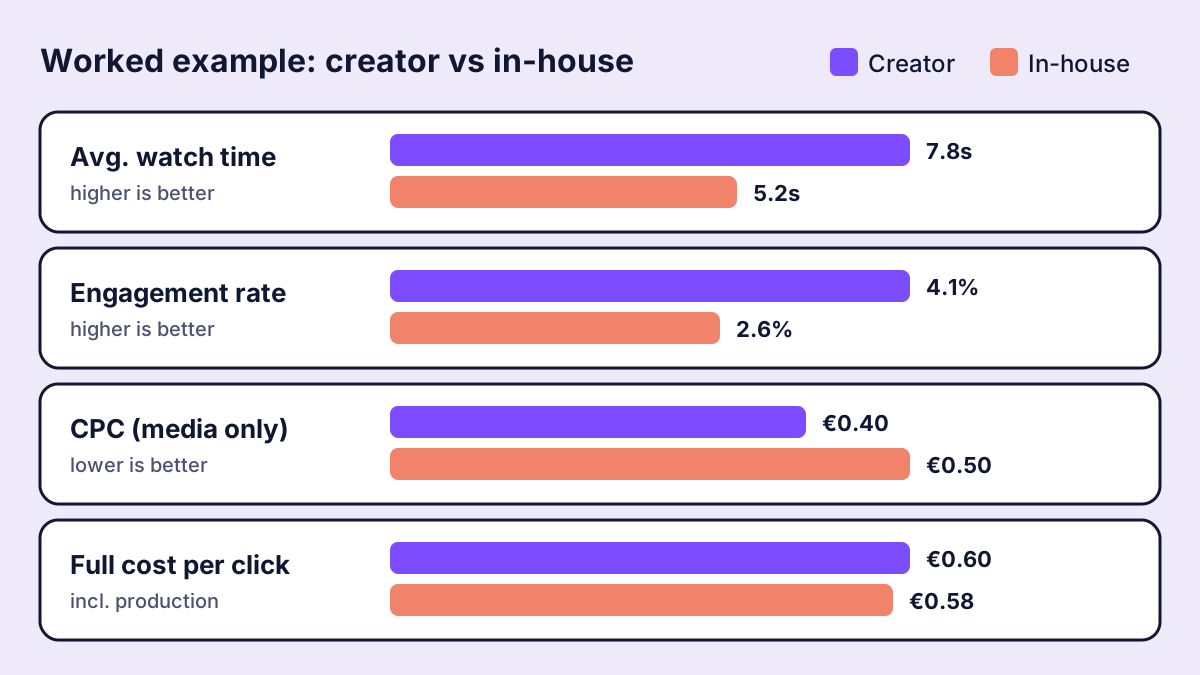
Figure 1: Worked example from the same campaign. Creator leads on watch time, engagement and CPC; once production is included, in-house edges ahead on cost per click.
Where creator content is strong
Creator content is strong where trust and closeness matter:
- Trust and social proof: a person the audience already follows explains a product more credibly than a brand claim.
- Native look: creator videos look like the feed around them, which lowers the barrier to keep watching.
- Consideration: reviews, tutorials, comparisons and "I tried it" formats fit exactly the phase in which people weigh their options.
In the data: higher average watch time, more shares and saves, a stronger engagement rate, more positive comments. If creator content does not beat in-house content on these signals, the argument for paying the premium is missing.
Where in-house content wins
In-house content wins where control matters more than closeness:
- Product clarity: when a product needs explaining or detailed staging, your own production is usually more precise.
- Brand consistency: colours, tone, claims and legal requirements are fully under control.
- Iteration speed: a new hook, a different CTA, a shorter cut. In-house can produce variants within days. With creators, every change depends on coordination, availability and usage rights.
- Performance objectives: for traffic and conversions, a clear benefit and a clear CTA often count for more than the person on screen.
In the data this often shows up in CPC, CTR and CPO.
Without a naming convention there is no comparison
All of this assumes you can tell creator and in-house assets apart. The ad platforms have no column for production type: that information lives in the ad name, if the team puts it there.
A naming convention makes the split measurable, for example:
Year_MonthDay_Format_Production_CreatorName_Description
This gives names like 2026_0915_video_creator_Lena_Unboxing or 2026_0915_image_inhouse_Productshot. Every segment becomes a filter: format, production type, creator, motif.
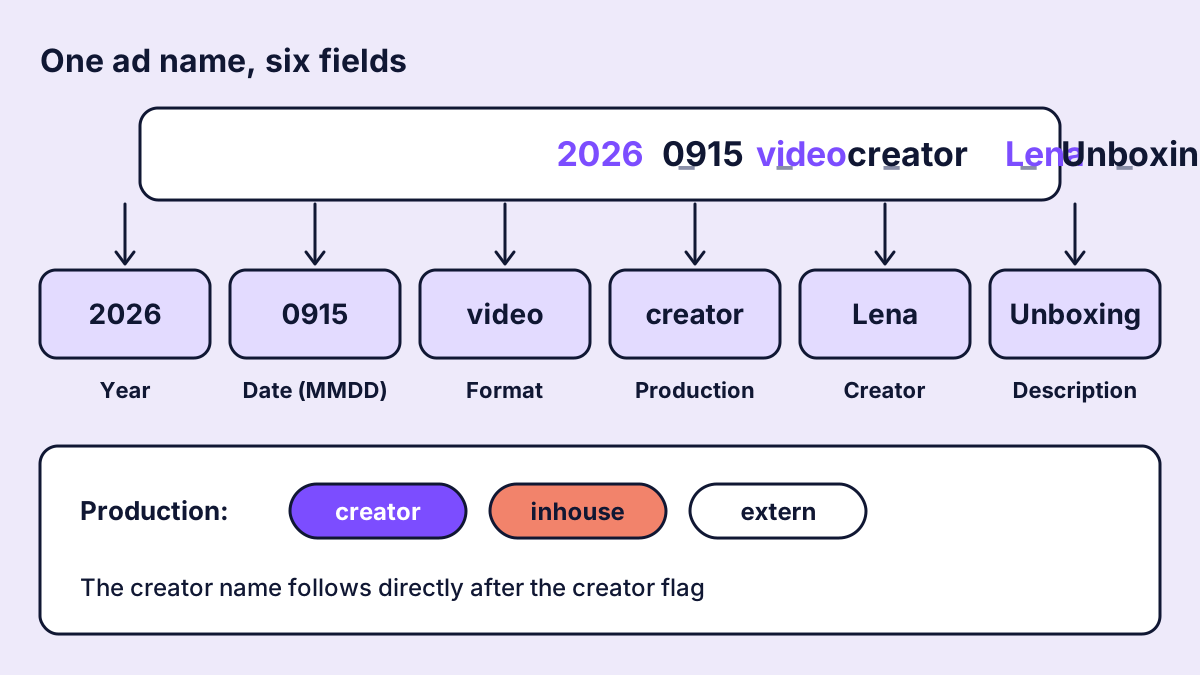
Figure 2: One ad name becomes six fields you can analyse.
Three rules from practice:
- Always state the production type explicitly. Not just "creator" or "inhouse", but also a separate marker for externally produced assets, so they do not land in either bucket.
- Only write the creator's name after a clear flag. A bare first name could just as well be a motif or a campaign name.
- Spell names consistently. Three spellings of the same creator become three creators in the report.
Look at creators one by one
"Creator content" is not a single category. The gap between the best and the weakest creator is often wider than the gap between creator and in-house overall:
- Which creator? Rank on the target KPI of the funnel stage, with a minimum spend so small tests do not end up on top by chance.
- How many assets? One creator with one strong video is a hint. One creator with five strong videos is a pattern.
- Watch time and engagement together: someone who holds people's attention and triggers reactions at the same time is especially valuable for consideration.
- Fatigue: if frequency rises while watch time or CTR falls, the asset is worn out. With creators, the person can wear out too.
When to brief a creator, when to produce in-house
In the end you need a decision, not a table:
- What is the asset's job? Trust and consideration lean towards creators, product explanation and conversion towards in-house.
- Is there data already? If so, compare full cost per result with the same objective, platform and period. If not, test both in parallel.
- How often do you need to iterate? Many variants in a short time favour in-house.
- Is there a proven creator? Then brief them again instead of starting from zero.
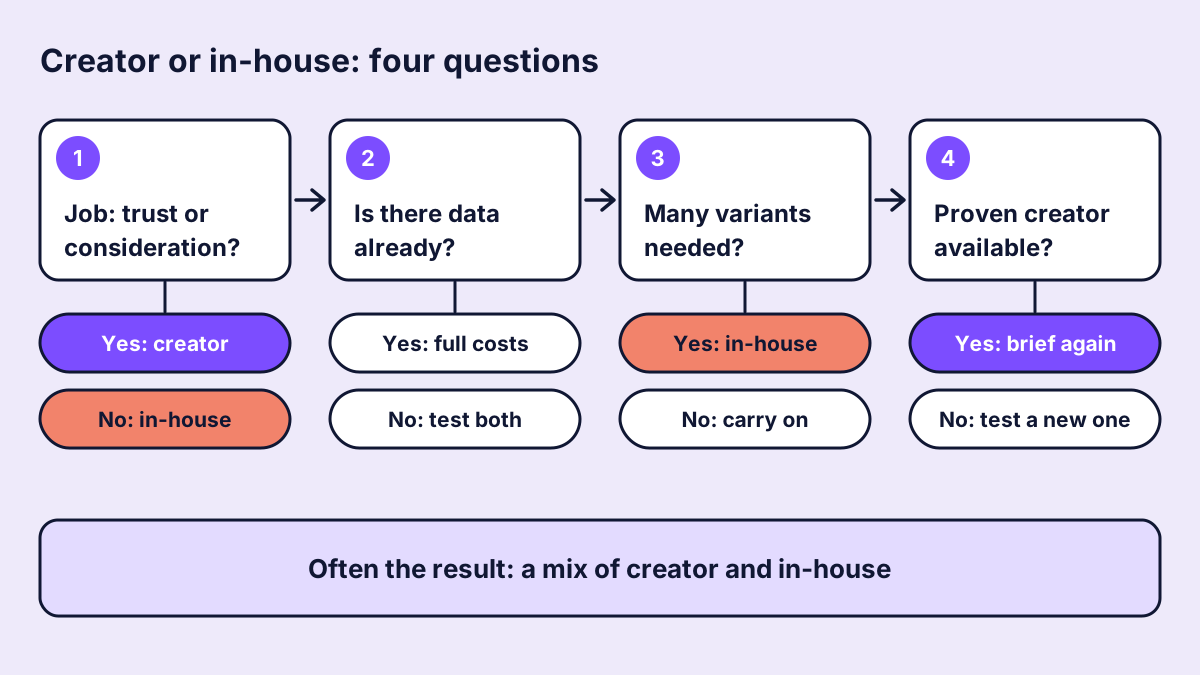
Figure 3: Four questions, one decision. Many brands end up with a mix.
How sugarLENS makes the comparison
sugarLENS reads the production type and the creator name from the ad name. Assets are classified as creator, in-house or external, and a creator name is only picked up after an explicit flag. Every asset is ranked on the metric it was booked for: watch time, engagement rate, CPC or CPO.
In the Enterprise Pro plan, the Creator Deep Dive tab shows a brand's creators with KPI cards, rankings, a view of watch time against engagement rate and a creator table. Clicking a creator filters the complete creative list down to their assets. If you prefer to ask, sugarChat also returns a creator ranking, likewise part of Enterprise Pro. sugarLENS does not fill in production costs automatically: for the full-cost view they belong in the report alongside.
FAQ
Is creator content generally better than in-house content?
No. Each has its strengths, and only a fair comparison with the same objectives, platforms and periods shows which side wins.
Why should production costs be part of the comparison?
Because Ads Manager only knows media spend, and a creator fee can eat up a good CPC.
How many assets per creator do you need to draw a conclusion?
There is no fixed number. A single video is a hint, several assets with sufficient spend are a pattern.
What happens without a naming convention?
Then creator and in-house assets cannot be separated, because the platforms do not know the production type.